
Steel vs. Aluminum Welding: Choosing the Right Metal for Your Project
Short answer
Choose steel for load-bearing and corrosion-critical applications; choose aluminum for weight-sensitive, non-structural projects where density matters, steel is about 2.5 times denser than aluminum. Steel offers superior strength and simpler conventional welding processes (MIG/Stick) for faster turnaround. Aluminum requires specialized TIG equipment but delivers weight savings; when friction-welded to steel, aluminum-to-steel bond strength reaches 84% of the parent aluminum alloy's proof stress at optimized conditions (170 MPa pressure, ~2 kJ energy input). For elevated-temperature service, aluminum with 4043 filler tolerates sustained exposure above 150°F. Match steel to structural demands and harsh environments; match aluminum to weight constraints and non-structural repairs.
Why Metal Selection Matters in Detroit: Mobile Fabrication, Salt Climate, and Downtime Cost#
A gate fails in January. A security cage rusts through by spring. A railing corrodes faster than expected. In Detroit and the Great Lakes region, the choice between steel and aluminum is not academic, it is the difference between a repair that lasts years and one that fails within a season or two. Downtime cost and material availability compound the decision: a 24-hour emergency repair demands not only the right metal but the right equipment and inventory on hand.
Metal selection discipline exists precisely to close this gap between material properties and real-world performance in harsh climates. The decision rests on four pillars: structural load-bearing capacity, corrosion resistance under freeze-thaw and salt exposure, fabrication speed and mobile availability, and total cost of ownership including replacement cycles.
The Mobile Fabricator's Dilemma: 24-Hour Availability and Freeze-Thaw Durability#
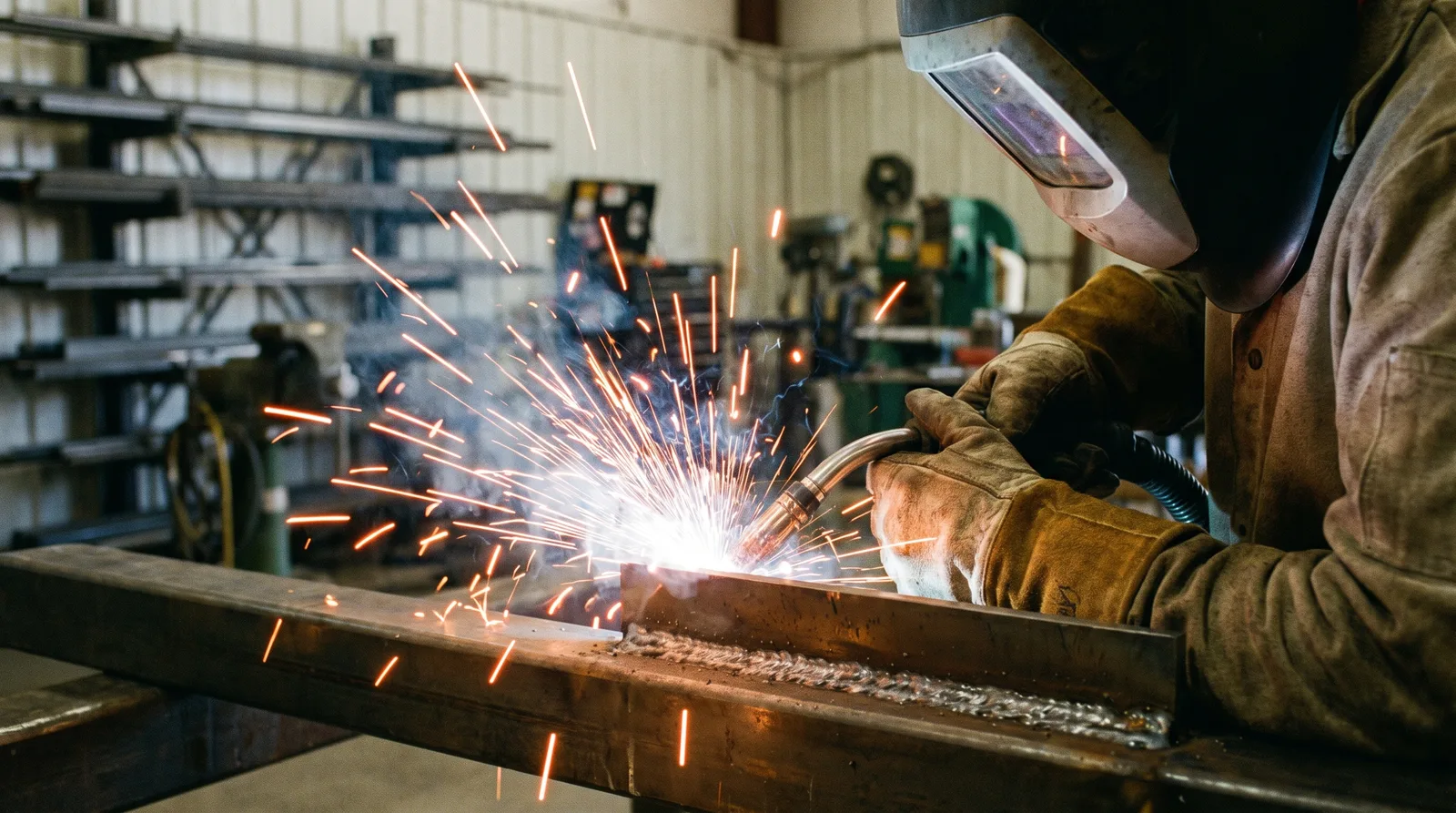
Emergency repairs in winter demand both speed and durability. A property owner needs the gate fixed today and expects it to survive the next thaw cycle without rust blooming through the weld. Steel and aluminum behave differently under these pressures. Steel is the practical choice for 24-hour emergency repairs because it is faster to set up and weld, while aluminum requires specialized TIG equipment, skilled operators, and shop conditions not available in mobile settings, a material difference that shapes almost every emergency job.
Mitch, Owner & Lead Welder at Capital M, has found that material choice often determines whether a 24-hour job stays on schedule. Inventory matters: most mobile shops stock steel rod and wire in common grades; aluminum requires dedicated TIG equipment and filler stock that not every fabricator carries. A call at 10 p.m. for a broken gate by noon the next day almost always means steel, because the material and the process are ready.
How Material Choice Affects Emergency Repair Timelines and Total Cost of Ownership#
A steel repair costs less per pound but may require galvanizing or paint to survive the salt season. An aluminum repair avoids corrosion entirely but costs more upfront and demands specialized welding skill. Over the medium term, the cheaper steel repair may cost more if it rusts and needs replacement; the aluminum repair holds its value but never becomes cheaper than the initial investment.
Total cost of ownership includes not only material and labor but also replacement frequency and downtime. A security cage that fails repeatedly costs more in cumulative repairs and lost revenue than one that lasts much longer. A railing that requires touch-up paint regularly is more expensive to maintain than one that does not. The decision is not which metal costs less today, but which costs less over the life of the structure.
Steel vs. Aluminum: Material Properties and Weldability#
Fundamental Differences in Strength, Weight, and Ease of Welding#
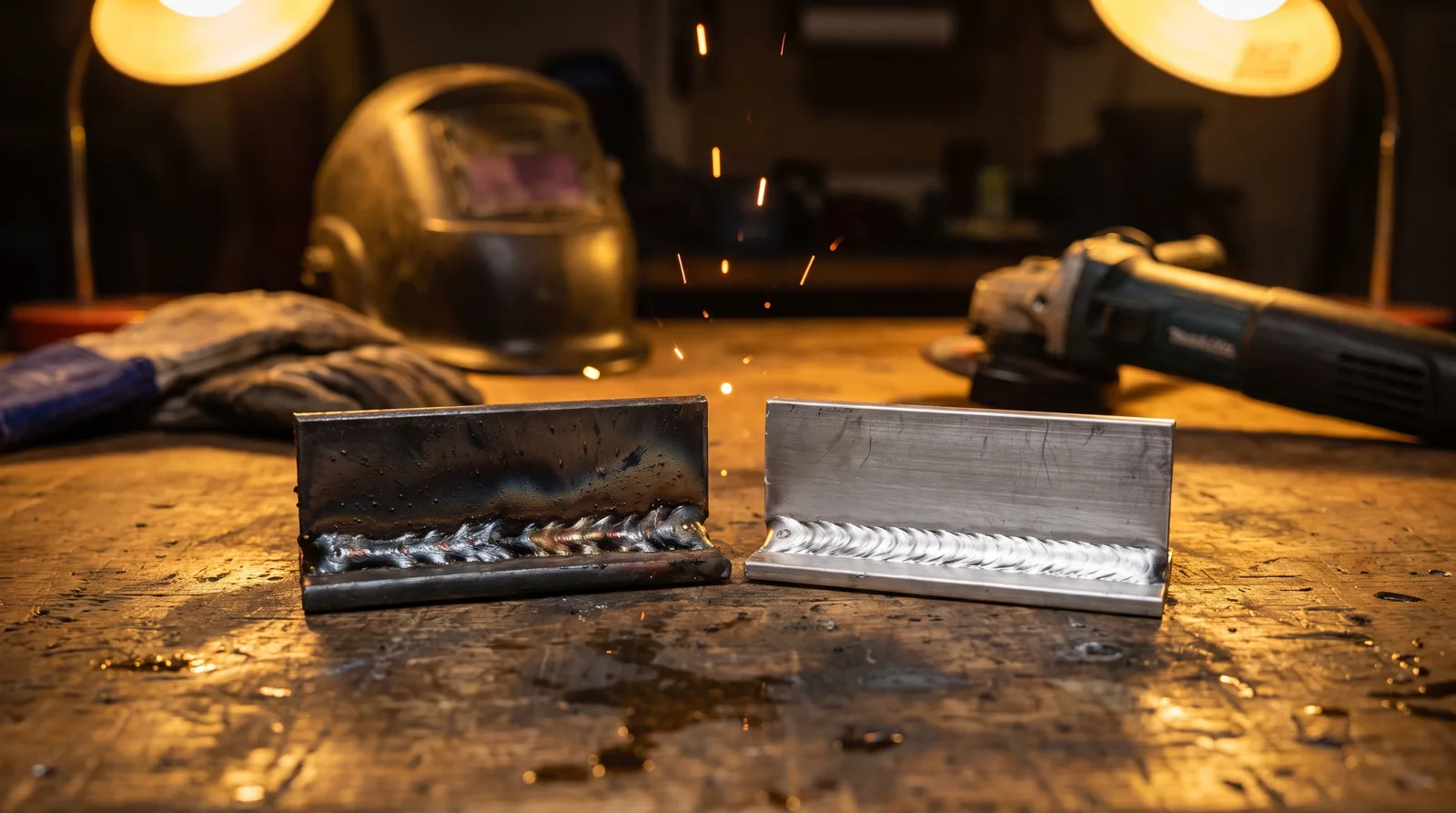
Steel is roughly 2.5 times denser than aluminum, meaning a steel beam weighs significantly more than an aluminum one of the same size. Steel compensates by offering higher strength per unit weight in most applications, making it the standard for load-bearing structures like security cages, gates, and railings. Aluminum is lighter, which matters for structures that must be moved or installed quickly, but its lower strength means thicker sections are often required to meet the same load rating.
Weldability favors steel in mobile and emergency settings. Steel responds well to both MIG and Stick welding, processes that most fabricators master early and that require no exotic equipment. Aluminum demands TIG welding, a slower, more skill-intensive process that requires a certified operator and clean, oxide-free surfaces, which is why steel's forgiving weldability is a decisive advantage in 24-hour repair windows, covered above.
Why Aluminum and Steel Do Not Weld Together, and What Workarounds Actually Work#
Aluminum and steel have fundamentally incompatible metallurgy: they form brittle intermetallic compounds at their interface, and their thermal expansion rates differ so much that cooling stresses crack the joint. Conventional arc welding cannot bridge them reliably. The question "Can you JB weld steel to aluminum?" reflects this reality: adhesive bonding is not a structural solution and will fail under load or thermal cycling.
Inertia friction welding, a solid-state process that rotates one part against the other under pressure until friction generates heat, can join steel and aluminum, but with significant limitations. This process applies pressure and uses weld energy under optimized conditions, achieving bond strength at only 84% of the parent aluminum alloy's proof stress. This means the joint is weaker than the aluminum itself, unsuitable for load-bearing applications. Inertia friction welding is a specialized, expensive process available only in well-equipped shops, not in mobile or emergency repair scenarios.
The practical answer: do not attempt to weld steel to aluminum in the field. If a structure must join both metals, use mechanical fasteners (bolts, rivets) or design the structure in one metal only.
Welding Method Selection: Which Processes Favor Steel vs. Aluminum in Mobile and Shop Settings#
Steel dominates mobile fabrication because MIG and Stick welding are fast, forgiving, and require minimal surface preparation. A welder can set up, tack, and complete a gate repair in hours. Stick welding works outdoors in wind and cold, a critical advantage in winter emergency repairs. MIG welding is faster and produces cleaner welds, preferred for shop work where power and ventilation are reliable.
Aluminum requires TIG welding for structural quality, covered above as a constraint on 24-hour mobile availability. TIG requires shielding gas, a clean tungsten electrode, and filler rod fed by hand, three variables that slow production and raise the skill floor. A 24-hour repair in aluminum is possible only if the shop has TIG equipment and a certified operator standing by.
For security cages and custom gates, steel's weldability and strength make it the default. Aluminum is chosen only when weight is critical or corrosion is the dominant concern.
Corrosion, Salt, and Climate: Real Durability in Midwest Winter Conditions#
Steel Corrosion and Galvanizing Protection in Great Lakes Freeze-Thaw Cycles#
Steel rusts when exposed to moisture and oxygen, a process accelerated by salt and freeze-thaw cycles. In the Great Lakes region, winter salt on roads and parking lots, combined with spring thaw and summer humidity, creates ideal conditions for corrosion. Bare steel welds are particularly vulnerable because the heat-affected zone (the area around the weld where the metal's structure changes) often has lower corrosion resistance than the base metal.
Steel requires galvanizing or paint to protect against corrosion in salt and freeze-thaw environments, while aluminum's natural oxide layer provides inherent corrosion resistance without maintenance, the key material difference that shapes long-term durability. Galvanizing, a hot-dip zinc coating applied after fabrication, is the standard defense when steel is chosen. The zinc layer sacrifices itself to protect the steel underneath, a process called cathodic protection. Galvanizing is durable and cost-effective, lasting many years depending on exposure severity. However, galvanizing cannot be applied after welding if the weld must remain visible or if the structure is already assembled. This is why many fabricators weld first, then galvanize, a process that adds time and cost but ensures complete protection.
Welders who work with galvanized steel often drink milk after welding, a practice rooted in the risk of metal fume fever. Heating galvanized steel releases zinc oxide fumes, which can cause temporary flu-like symptoms. Milk (or calcium-containing foods) does not prevent the condition, but the ritual reflects a real occupational hazard and a reminder to use proper ventilation and respiratory protection when welding galvanized material.
Aluminum Oxidation and Salt Exposure: Long-Term Performance of Gates, Railings, and Security Cages#
Aluminum oxidizes instantly when exposed to air, forming a thin aluminum oxide layer that is self-healing and highly corrosion-resistant. This oxide layer is why aluminum does not rust like steel, it is already "rusted" at the surface, and that layer protects everything underneath. In salt environments, aluminum outperforms bare steel dramatically. A gate or railing in aluminum will not corrode, pit, or require paint or galvanizing.
The catch: aluminum oxide is porous and can be penetrated by chloride ions in salt spray. Over time, pitting corrosion can occur, especially at welds or in crevices where salt accumulates. Anodizing, an electrochemical process that thickens and hardens the oxide layer, extends aluminum's life in harsh climates. Anodized aluminum is more expensive than bare aluminum but is still cheaper than galvanized steel over a long-term lifecycle in a salt environment.
For gates and railings in Detroit and the surrounding region, aluminum's corrosion resistance is a major advantage. A security cage in aluminum will not require repainting or touch-up, a significant maintenance savings over steel.
Why Welding Heat Affects Corrosion Resistance, and Which Filler Metals Matter for Harsh Climates#
Welding heat changes the metallurgy of both steel and aluminum, often reducing corrosion resistance in the heat-affected zone. In steel, the zone around the weld can become brittle or more prone to corrosion if the cooling rate is too fast. In aluminum, welding can dissolve the alloying elements that give the base metal its strength, weakening the joint and its corrosion resistance.
Filler metal selection is critical. For steel in salt environments, a low-carbon, low-alloy filler rod (such as E7018 for Stick or ER70S-2 for MIG) is standard. For aluminum, the choice depends on the base alloy: 4043 filler is common for general-purpose welding and offers good corrosion resistance. According to Miller Welds, 4043 filler metal remains stable in typical outdoor conditions, meaning welds made with it hold up in everyday exposure.
For harsh climates, post-weld heat treatment or stress relief can restore some corrosion resistance, but this adds cost and is rarely done in mobile or emergency repairs. The practical lesson: specify the right filler metal upfront, and accept that the weld zone will always be slightly more vulnerable than the base metal.
Cost, Availability, and Fabrication Logistics: Site-Ready vs. Shop Work#
Material Cost and Lifecycle Economics: Upfront Price vs. Replacement and Maintenance Frequency#
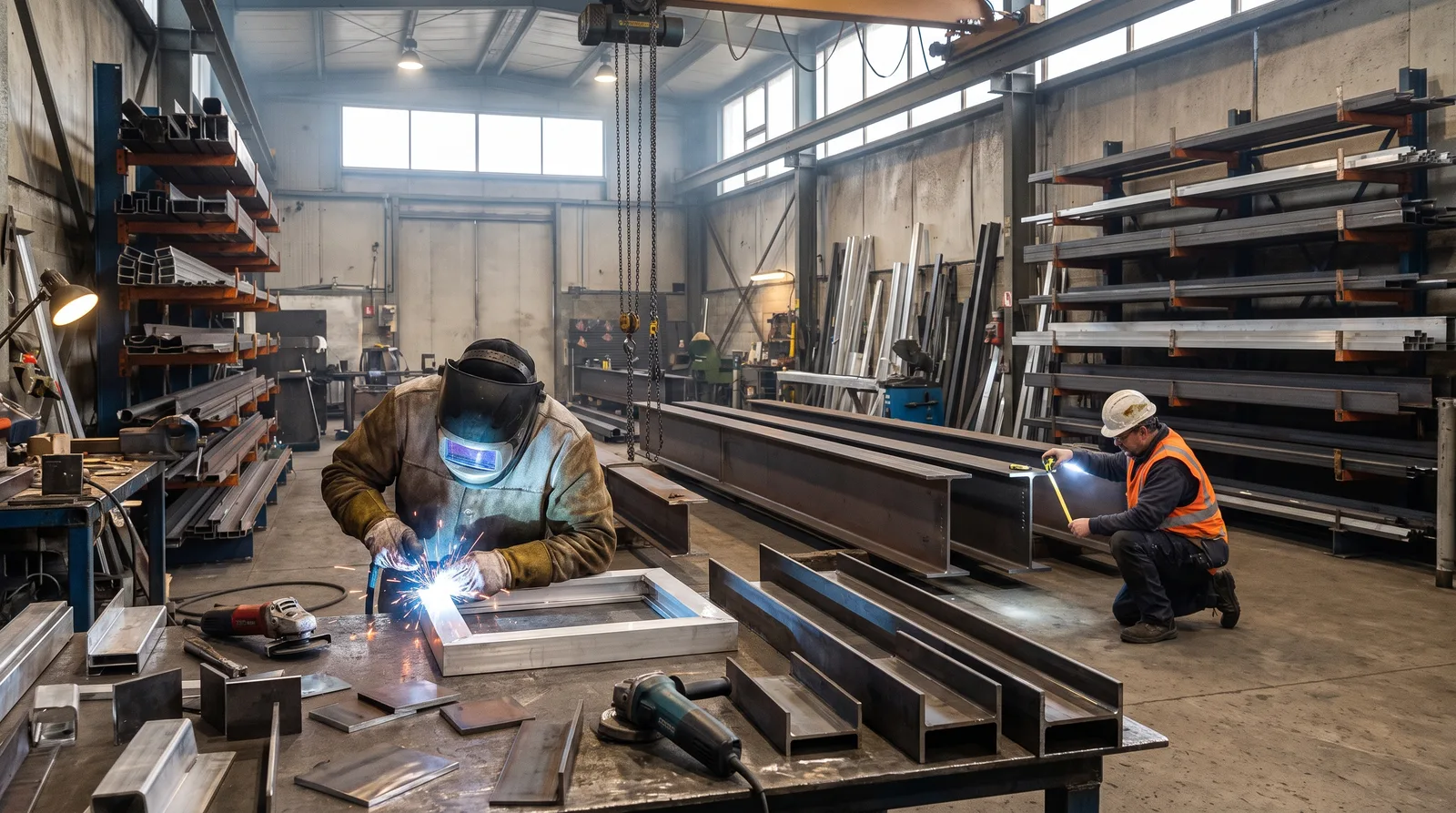
Steel is cheaper per pound upfront but may cost more over the long term due to maintenance and replacement cycles, while aluminum costs more initially but requires no maintenance, the central lifecycle tradeoff that shapes project economics. A galvanized steel gate requires periodic maintenance (paint touch-up, rust inspection). An aluminum gate costs more upfront but will not rust. Over the long term, the aluminum gate is often cheaper.
The decision depends on the structure's expected lifespan and the owner's maintenance budget. A temporary security cage might use steel and accept repainting periodically. A permanent gate or railing in a harsh climate should be aluminum or galvanized steel, with aluminum preferred if budget allows.
Cost also varies by application. A small repair, a broken hinge, a cracked rail, might favor steel because the material is cheap and available. A large structure, a custom security cage, a decorative railing, might favor aluminum because the weight savings reduce installation labor and the corrosion resistance justifies the material premium.
Mobile Fabrication Feasibility: Inventory, Tooling, and 24-Hour Repair Completion by Metal Type#
Mobile fabrication is steel's domain. A mobile welder carries MIG and Stick equipment, common steel rod and wire, and the skill to set up and weld in almost any condition. Steel repairs can be completed in hours, often on-site. Aluminum requires TIG equipment, specialized filler rod, and a clean, controlled environment, rarely available in mobile settings, covered above as a constraint on same-day availability.
Inventory matters. A well-stocked mobile shop carries multiple grades of steel rod and wire, covering most common applications. Aluminum inventory is smaller and more specialized, often ordered as needed. This inventory gap is a major reason steel dominates emergency repairs.
Structural Requirements for Security Cages and Custom Designs: Can Aluminum Meet Code, or Is Steel Mandatory?#
Building codes and security standards often specify steel for load-bearing structures. A security cage that must resist cutting, prying, or climbing is almost always steel because steel's strength and hardness are superior. Aluminum can be designed to meet the same load requirements, but it requires thicker sections and more material, driving up cost and weight.
For non-load-bearing applications, decorative railings, privacy screens, non-structural gates, aluminum is often acceptable and preferred. For load-bearing or security-critical structures, steel is the default and often the code requirement.
Custom designs can use either metal, but the choice cascades through the project. A steel design is faster to fabricate and easier to modify on-site. An aluminum design requires precision fabrication and careful assembly, better suited to shop work. For a one-off custom gate or cage, steel's flexibility and speed often win.
Choosing Your Metal: A Decision Framework#
The hardest metal to weld is not a single material but a combination of factors: thick sections, high-strength alloys, and poor access. Stainless steel, for example, is harder to weld than mild steel because it conducts heat poorly and is prone to cracking. Aluminum is harder to weld than steel because it requires TIG and demands clean surfaces. The "hardest" metal for your project depends on the geometry, the required strength, and the available equipment.
To choose between steel and aluminum for your project, answer these questions:
Is the structure load-bearing or security-critical? If yes, steel is almost always the answer. Aluminum can be designed to meet the same loads, but steel is cheaper, faster, and code-standard.
Do you need the repair completed within 24 hours? If yes, steel is the only practical choice. Aluminum requires shop time and specialized equipment.
Is corrosion resistance the dominant concern? If yes, aluminum is superior in salt environments and requires no maintenance. Steel requires galvanizing or paint and periodic touch-up.
Is weight critical? If yes, aluminum's lower density may justify the higher material cost and slower fabrication.
What is the expected lifespan? A temporary structure favors steel (cheap, fast). A permanent structure in a harsh climate favors aluminum (no maintenance) or galvanized steel (lower cost than aluminum but requires maintenance).
Is the structure custom or standard? Standard designs are faster in steel. Custom designs benefit from aluminum's lighter weight and corrosion resistance if budget allows.
For most Detroit-area property owners and emergency repairs, the answer is steel: it is available, fast to fabricate, and strong enough for gates, railings, and security cages. Aluminum is chosen when corrosion resistance or weight is the dominant constraint and when the project timeline permits shop fabrication.
The real cost of metal selection is not the material price but the downtime, maintenance, and replacement cycles it triggers. Choose the metal that minimizes total cost of ownership over the structure's expected life, not the one that costs least today.
| Property | Steel | Aluminum |
|---|---|---|
| Relative Density | 2.5 times heavier than aluminum | Baseline (lighter weight) |
| Typical Welding Process (Mobile/Emergency) | MIG or Stick welding | TIG welding required for structural quality |
| Surface Preparation Demands | Minimal; forgiving in field conditions | Clean, oxide-free surfaces essential |
| Setup Speed for 24-Hour Repairs | Fast; equipment widely stocked in mobile shops | Slower; requires specialized TIG equipment and certified operator |
| Weather Performance (Winter/Outdoor) | Stick welding works in cold and wind; galvanizing options for corrosion | Slower TIG process; typically shop-based; natural corrosion resistance |
| Strength per Unit Weight | Higher; standard for load-bearing structures | Lower; often requires thicker sections for same load rating |
| Welding Process | Primary Metal | Skill Requirement | Field Viability | Setup/Completion Speed |
|---|---|---|---|---|
| MIG welding | Steel | Moderate; early fabricator mastery | Excellent in shops; reliable power/ventilation | Fast; preferred for shop work |
| Stick welding | Steel | Moderate; broadly mastered | Excellent outdoors in wind and cold | Moderate; works in harsh winter conditions |
| TIG welding | Aluminum | High; certified operator required | Limited in mobile settings; requires clean, dry environment | Slow; skill-intensive process |
| Inertia friction welding | Steel-to-Aluminum dissimilar join | Specialized; expensive equipment | Not viable in mobile or emergency scenarios | High equipment cost; labs and large shops only |
Frequently Asked Questions
Why doesn't aluminum weld to steel?
Aluminum and steel form brittle intermetallic compounds at their interface and have incompatible thermal expansion rates, causing cracks during cooling. Conventional arc welding cannot reliably join them. The only viable workaround, inertia friction welding, produces joints at 84% of the aluminum alloy's strength, making it unsuitable for load-bearing applications and unavailable in field repair scenarios.
Can you JB weld steel to aluminum?
Adhesive bonding is not a structural solution and will fail under load or thermal cycling. For applications requiring both metals, use mechanical fasteners (bolts, rivets) or design the structure in a single metal only.
Which metal should I choose if I need emergency repairs completed within 24 hours?
Steel is the practical choice. MIG and Stick welding are fast, forgiving, and widely available in mobile fabricator inventories. Aluminum requires TIG welding, a slower, skill-intensive process that demands a certified operator and is rarely ready for 24-hour emergency calls. Stick welding also works outdoors in winter conditions when mobile repairs are most urgent.
How does Midwest winter salt and humidity affect steel vs. aluminum gate and railing longevity?
Steel requires galvanizing or paint to survive the salt season and can rust, necessitating replacement cycles that compound total cost of ownership. Aluminum resists corrosion entirely, avoiding repeated touch-ups and failing cycles. However, the higher upfront labor cost of aluminum welding (specialized TIG skill) must be weighed against lower future maintenance and longer structure lifespan in freeze-thaw climates.
Can aluminum security cages meet structural requirements, or must they be steel?
Steel is typically required for security cages because it provides superior strength-to-weight performance compared to aluminum. While aluminum can technically meet structural needs, it demands thicker materials to achieve equivalent load ratings, which negates its weight benefits and increases costs. Steel's superior weldability also makes it more practical for on-site construction and repairs.
What's the hardest metal to weld in a mobile fabrication setting?
Aluminum is the most challenging. It requires TIG welding, a slower, high-skill process demanding a certified operator and clean, oxide-free surfaces. Steel, by contrast, responds well to forgiving MIG and Stick welding that most fabricators master early. This makes aluminum impractical for mobile and emergency repairs where speed and inventory availability are critical.
What are the real cost differences when factoring in mobile fabrication vs. shop work?
Steel costs less per pound and uses readily available equipment, but may need galvanizing or paint to survive salt exposure, adding expense and replacement cycles. Aluminum costs more upfront due to specialized TIG labor but avoids corrosion-driven maintenance. Over the structure's life, frequent steel repairs can exceed aluminum's higher initial cost. Mobile work heavily favors steel due to equipment availability; aluminum typically requires shop work, adding delay and labor premiums.
Sources
- pure.manchester.ac.uk (via Perplexity sonar-pro) - Pure (2026-09-01)
- Advanced Aluminum Welding Techniques: MIG and TIG Tips and ... - Millerwelds (2026-09-06)
- Aluminum vs Steel: The Best Metal for Your Project | TFG USA - Tfgusa (2026-09-06)
- Pricing/Limits | Steel Docs - Docs (2026-09-06)