
welding services
Short answer
Welding services require selecting between shop fabrication and mobile repair based on environmental limits, code compliance, and process physics. Sourcing decisions hinge on whether work occurs in a controlled shop at $60 to $85 ([Flexcrewusa](https://flexcrewusa.com/blog/average-welding-cost-per-hour-what-businesses-need-to-know)) per hour or on-site at $85 to $125 per hour ([Flexcrewusa](https://flexcrewusa.com/blog/average-welding-cost-per-hour-what-businesses-need-to-know)). While gas metal arc welding provides high shop productivity, shielded metal arc welding remains the standard for outdoor structural integrity under adverse weather ([Xometry](https://www.xometry.com/resources/sheet/smaw-vs-gmaw)).
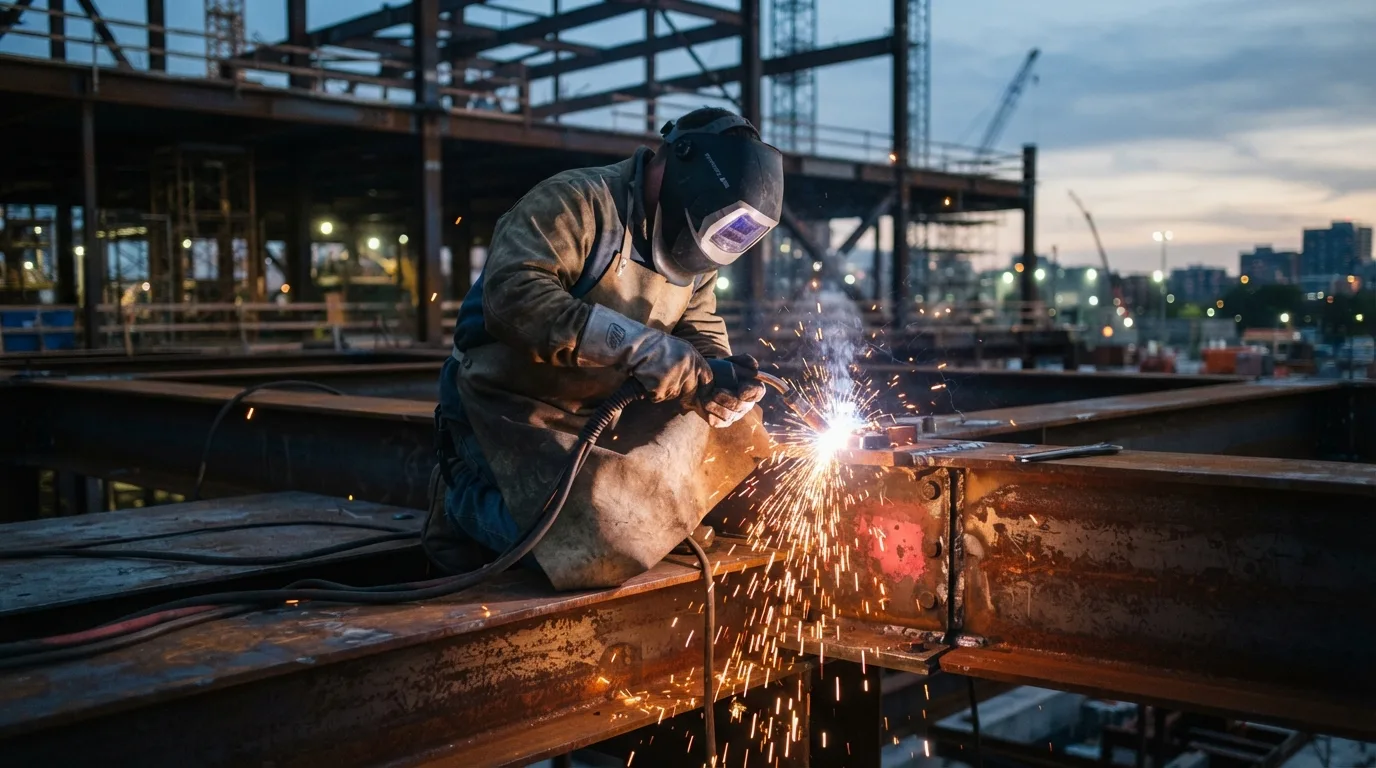
“Welding shall not be done when the ambient temperature is lower than 0° F, when surfaces are wet or exposed to rain, snow, or high wind velocities, nor when welders are exposed to inclement conditions.”
— AWS D-1.5 Section 3.1.3, Bridge Welding Code, American Welding Society
Treating field welding like shop fabrication often leads to early metallurgical failure, particularly under freeze-thaw cycles that demand strict thermal controls. Field and mobile welding services typically command $85 to $125 (Flexcrewusa) per hour on-site, compared to $60 to $85 per hour for in-shop fabrication (Flexcrewusa). Selecting the right welding provider requires evaluating process mechanics against environmental exposure, labor cost variables, and mandatory building codes.
- Evaluate site conditions
- Select welding process
- Calculate preheat
- Execute joint
- Complete NDT inspection
Evaluating Welding Processes for Outdoor and Cold-Climate Applications#
Shielded Metal Arc Welding (SMAW), commonly called stick welding, functions via an electric arc struck between a covered consumable electrode and the base metal. The flux coating decomposes under arc heat to release shielding gases and generate a protective slag blanket over the weld pool (Xometry). This self-contained reaction shields the molten pool without an external cylinder, making SMAW practical for outdoor repairs, structural erection, and pipeline work where wind strips away external gas coverage (Xometry).
In contrast, Gas Metal Arc Welding (GMAW), or MIG welding, feeds a continuous solid wire electrode through a torch while relying on a separate shielding gas supply (Xometry).
Ambient temperature dictates whether field welding can proceed safely, as ambient cold accelerates cooling kinetics in the heat-affected zone (HAZ), which is the non-melted base metal area whose microstructural properties are altered by welding heat. Lincoln Electric identifies ambient temperature as a primary factor when determining necessary preheat requirements (Lincolnelectric). Under AWS D-1.5 Section 3.1.3 for bridge fabrication, welding is prohibited when the ambient temperature falls below 0°F (-18°C), or when steel surfaces are wet or exposed to rain, snow, or high wind (Connect). Electrode and preheat standards published by AQC Inspection also mandate that welding is not permitted below 0°F (-18°C) (Aqcinspection).
HAZ Cooling Rate: Cooling Rate (°C/sec) = ΔT / Δt
Where ΔT represents the temperature drop through the transformation range and Δt represents time elapsed in seconds. Industrial Monitor Direct notes that during in-service pipeline welding at an ambient temperature of -5°C, unrestrained HAZ cooling rates reach 30 to 40°C/sec, compared to 15 to 20°C/sec in a 20°C ambient environment (Industrialmonitordirect). This represents an estimated 50% to 100% increase in cooling speed (Industrialmonitordirect). Under these -5°C conditions, the time required for the joint to pass through the critical 300°C cooling threshold drops to 4 to 6 seconds, down from 8 to 12 seconds at 20°C (Industrialmonitordirect). Rapid cooling traps diffusible hydrogen and creates hardened microstructures prone to cracking. Mitigating this risk requires strict adherence to preheat schedules that retard cooling times.
| Ambient Parameter | 20°C Ambient Environment | -5°C Ambient Environment | Metallurgical Impact |
|---|---|---|---|
| Unrestrained HAZ Cooling Rate | 15 to 20°C/sec (Industrialmonitordirect) | 30 to 40°C/sec (Industrialmonitordirect) | 50 to 100% faster cooling in cold conditions (Industrialmonitordirect) |
| Time to Reach Critical 300°C Range | 8 to 12 seconds (Industrialmonitordirect) | 4 to 6 seconds (Industrialmonitordirect) | Accelerated transit through hydrogen embrittlement zone (Industrialmonitordirect) |
| Operational Threshold | Standard preheat baseline (Industrialmonitordirect) | Elevated preheat required (Industrialmonitordirect) | Prohibited entirely below 0°F (-18°C) (Connect; Aqcinspection) |
Cost Structures and Pricing Factors for Welding Services#
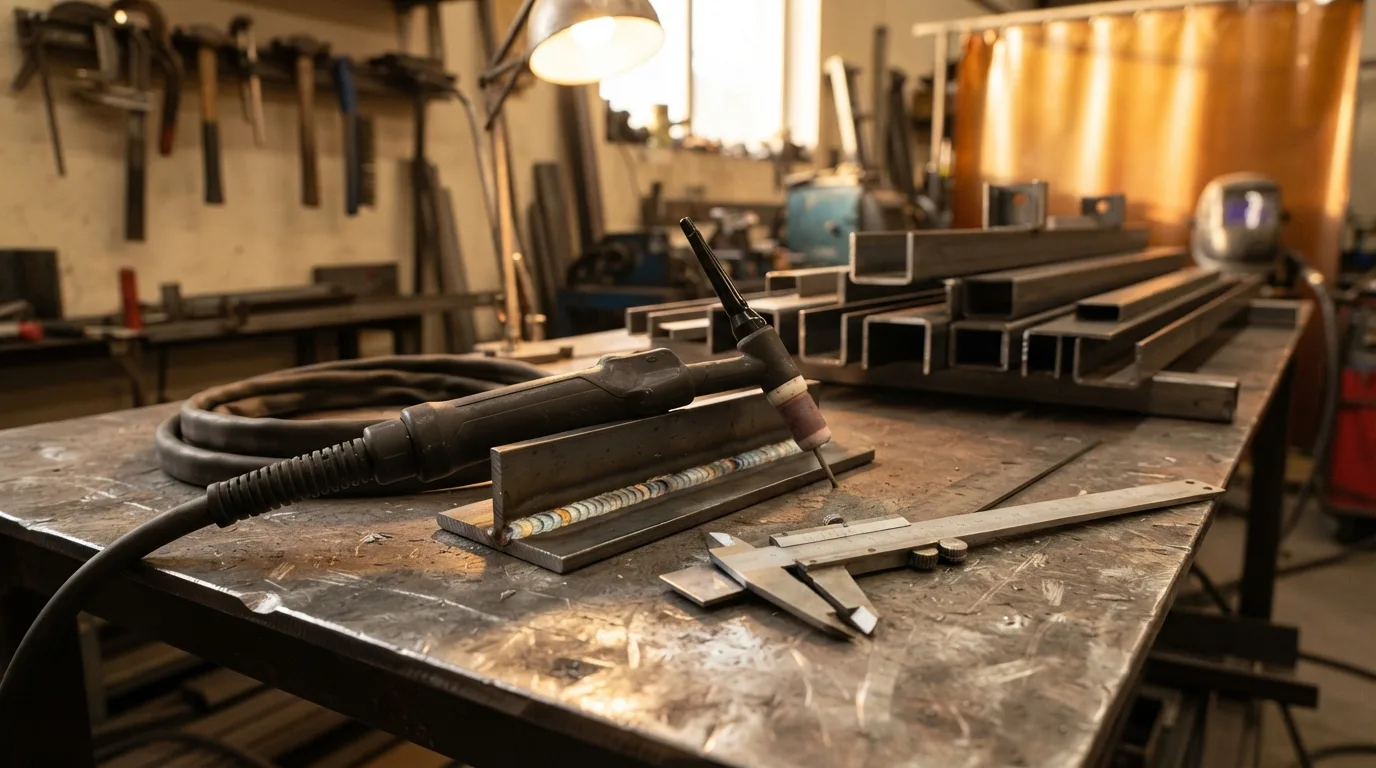
Welding rates reflect labor expertise, mobilization logistics, equipment depreciation, and consumable consumption. According to an analysis by FlexCrew, national average hourly billing rates for welding services range from $65 to $125 per hour (Flexcrewusa). Direct labor represents 60% to 70% (Flexcrewusa) of total project costs (Homeguide; Flexcrewusa). The remainder comprises base metals, filler alloys, gases, and shop machinery usage (Flexcrewusa).
Work setting creates significant rate variance. In-shop fabrication runs $60 to $85 per hour, whereas field welding on-site costs $85 to $125 per hour plus travel charges (Flexcrewusa). As documented by FlexCrew, field and mobile services carry a $20 to $40 (Flexcrewusa) per hour premium over shop rates to offset transit overhead and specialized service truck equipment (Flexcrewusa). Mobile residential projects typically invoice at $75 to $125 (Flexcrewusa) per hour alongside a 1-to-2-hour minimum charge (Homeguide). Emergency or after-hours field welding commands premium billing of $125 to more than $200 per hour (Flexcrewusa).
Process specialization also shifts labor billing. Standard MIG welding commands $65 to $90 (Flexcrewusa) per hour, whereas TIG (Gas Tungsten Arc Welding) projects range from $75 to $125 per hour due to the precision needed for stainless steel or thin-gauge assemblies (Flexcrewusa). Certified industrial pipe welding exceeds $150 (Flexcrewusa) per hour in high-demand markets like Texas (Flexcrewusa).
Total Estimate = (Labor Hours × Hourly Rate) + Materials + Consumables + Trip Fee
Consumables are typically calculated at 15% to 20% of total labor costs (Flexcrewusa). Minimum service fees ensure project overhead remains covered on minor calls. HomeGuide reports that smaller welding projects frequently carry a minimum charge equal to 1 to 2 labor hours (Homeguide). Thumbtack indicates that some welders apply a flat minimum fee of $60 regardless of how minor the task is (Thumbtack). Mobilization distance compounds these baseline thresholds. LTJ Industrial notes that local service within 50 miles often incurs nominal trip charges, while remote sites exceeding 200 miles routinely require full-day labor minimums (Ltjindustrial).
Base material selection dictates linear welding costs. Mild low-carbon steel costs $0.50 to $2.00 per linear inch of weld (Homeguide), whereas stainless steel ranges from $1.00 to $3.50 per linear inch. Mitch, Owner & Lead Welder, notes that project scopes must evaluate metal type alongside mobilization access to avoid cost overruns on simple field repairs.
MIG and stick welding vertical disciplines exist specifically to balance these structural thermal dynamics and field mobilization variables against project budgets.
Welder Certifications, Industry Codes, and Structural Standards#
Structural welding demands strict compliance with engineering codes to protect public safety and physical infrastructure. Under AISC 341 and AISC 360 standards, CJP weld inspection rates can be reduced from a 100% baseline down to 25% (Iccsafe) if an individual welder or operator maintains a documented reject rate of 5% (Iccsafe) or less across a sample of at least 40 completed welds on a project (Iccsafe). This inspection reduction does not apply to demand-critical seismic welds (Iccsafe).
Fabrication facility qualifications streamline regulatory oversight on commercial developments. Under International Building Code (IBC) Section 1704.2.5.1, fabricators recognized as "Approved Fabricators" by the local building official are exempt from special inspections (Iccsafe). Programs such as the International Accreditation Service (IAS) AC472 accreditation provide building officials with verified criteria to approve manufacturer quality-control systems (Iccsafe).
Concurrently, AWS D-1.5 Section 3.2.1 mandates that base metal surfaces and joint edges must remain smooth, uniform, and completely free of fins, tears, or cracks prior to arc initiation (Connect).
To secure compliant, long-lasting structural steel or architectural metalwork:
- Identify code requirements (such as AWS D-1.5 for infrastructure or IBC Section 1704 for commercial buildings) before drafting project bids (Connect; Iccsafe).
- Verify base metal metallurgy and ambient temperature conditions to establish necessary preheat thresholds (Lincolnelectric; Aqcinspection).
- Audit welder tracking logs to determine whether the 5% maximum reject rate threshold applies for CJP ultrasonic inspection reductions (Iccsafe).
- Request an itemized estimate separating baseline labor hours from consumable allowances and travel fees (Flexcrewusa).
| Work Setting / Process | Typical Hourly Rate | Applicable Surcharges & Minimums | Operational Characteristics |
|---|---|---|---|
| In-Shop Fabrication | $60–$85/hr | Typically none | Controlled environment, cost-effective for portable components |
| Mobile Residential Welding | $75–$125/hr | 1–2 hr service minimum | Convenient for immovable residential items or small repairs |
| Field Welding (On-Site) | $85–$125/hr | Trip fee / travel charges | $20–$40/hr premium over shop work to cover transit overhead |
| MIG Welding (Process) | $65–$90/hr | Process standard | High deposition efficiency, best in wind-protected spaces |
| TIG Welding (Process) | $75–$125/hr | Process standard | High-precision work on stainless steel, thin gauge, or specialty alloys |
| Certified Industrial Pipe Welding | Exceeds $150/hr | Market premium (e.g., Texas) | Specialized industrial, pressure, and high-demand applications |
| Emergency / After-Hours Welding | $125–$200+/hr | Emergency premium rate | Immediate mobilization for urgent structural or equipment failures |
| Base Metal Type | Average Cost per Inch of Weld | Typical Project Applications | Welding & Material Considerations |
|---|---|---|---|
| Mild (Low-Carbon) Steel | $0.50–$2.00 | Broken metal chairs, mailbox posts, shelving brackets | Lowest linear cost, standard residential structural use |
| Stainless Steel | $1.00–$3.50 | Outdoor furniture, custom grills, sink repairs | Moderate-to-high cost, requires corrosion resistance and precision |
| Aluminum | $1.25–$4.00 | Aluminum boat repairs, bicycle frames, decorative wall art | Highest linear cost, requires oxide management and high heat conductivity handling |
Welding Project & Mobile Repair Cost Estimator
Calculates estimated welding project or repair costs based on hourly rate (shop vs mobile/emergency), labor time, materials, consumable surcharge, and mobile dispatch fees.
Labor Cost:
Materials & Consumables:
Estimated Total Cost:
Frequently Asked Questions
How much does a welding job usually cost?
=== FAQ ANSWER === Total welding costs depend on the scope, setting, and metal type. Smaller repair jobs and residential projects vary in cost, whether repairing bicycle frames, automotive exhausts, or metal furniture. On a per-inch basis, welding costs span $0.50 to $2.00 for mild steel, $1.00 to $3.50 for stainless steel, and $1.25 to $4.00 for aluminum, frequently supplemented by a 1- to 2-hour labor minimum or a flat minimum fee of at least $60. === END ===
What do most welders charge per hour?
Welding contractor billing rates vary nationally for smaller projects based on project scope, with broader averages often cited at $65 to $125 per hour. Rates vary by process and environment: in-shop work runs $60 to $85 per hour, standard MIG welding runs $65 to $90 per hour, TIG welding ranges from $75 to $125 per hour, mobile and on-site field welding commands $85 to $125 per hour, and certified industrial pipe welding can exceed $150 per hour. Emergency or after-hours field welding costs $125 to more than $200 per hour.
Sources
- [PDF] FIELD WELDING PROCEDURES - Connect NCDOT - Connect (2026-09-21)
- Non-destructive testing — Building code requirements and IAS AC472 accreditation - ICC - Iccsafe (2026-09-21)
- 2026 Average Welder Cost (with Price Factors) - Thumbtack (2026-09-21)
- SMAW vs. GMAW: What Are the Key Differences? | Xometry - Xometry (2026-09-21)
- How Much Does Welding Cost? (2026) - Homeguide (2026-09-21)
- What is Preheat? - Lincoln Electric - Lincolnelectric (2026-09-21)
- In-Service Welding on Gas Pipelines: Cold Weather HAZ Considerations – Industrial Monitor Direct - Industrialmonitordirect (2026-09-21)
- WELDING ELECTRODES AND PREHEAT REQUIREMENTS - AQC Inspection - Aqcinspection (2026-09-21)
- Average Welding Cost Per Hour: 2026 Pricing Guide - Flexcrewusa (2026-09-21)
- Mobile Welding Services Near Me: Complete 2026 Guide – LTJ Industrial Services - Ltjindustrial (2026-09-21)